


Drive north of Dallas on a weekday morning, and you’ll pass strip malls with sari shops, Indian grocery stores, temples, and street food joints that wouldn’t look out of place in Mumbai.
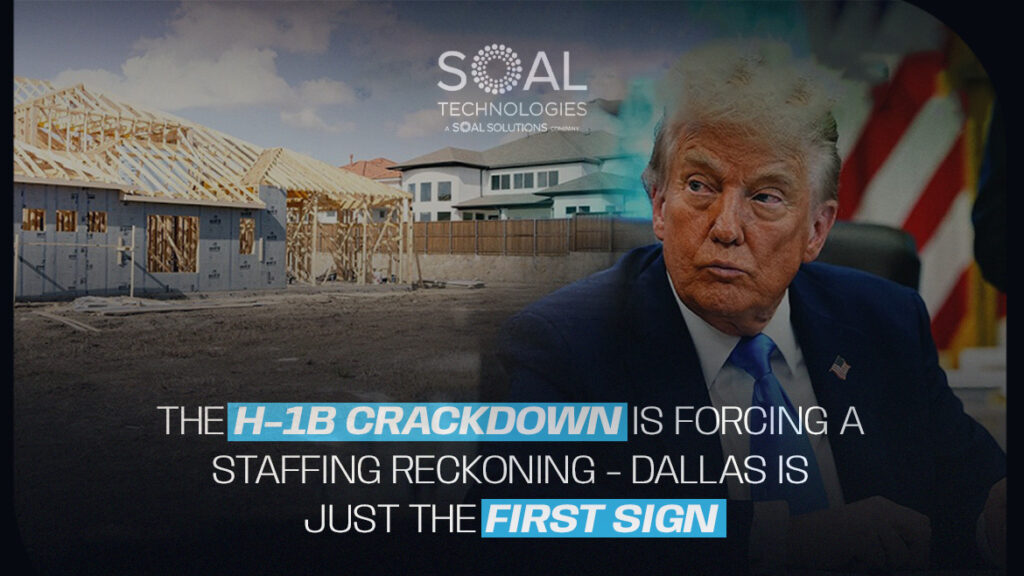
This corridor, Frisco, Prosper, and Celina, was built on one of the most extraordinary housing booms America had seen in decades. Now it’s the clearest example yet of an H-1B visa housing market unraveling in real time.
The Boom That Built Entire Towns
Over four years, the Dallas area landed nearly 32,000 new H-1B approvals, more than Silicon Valley, Seattle, San Francisco, or DC. Only New York had higher numbers.
Those workers didn’t scatter. They landed in Prosper, Frisco, and Celina, and those towns exploded. Populations tripled in five years. Collin County’s Indian-born population went from about 70,000 to over 116,000. In Frisco, the Indian share of residents went from 6% to nearly 20% in just over a decade.
Builders adjusted. Zach Schneider of Tradition Homes designed model homes with north-facing prayer rooms and spice kitchens for Indian buyers. At one point, South Asian buyers made up 70% of his sales. By early 2026, that had dropped below 30%, with 125 luxury homes still sitting unsold.
The $100,000 Axe That Split the Market in Two

Washington didn’t hit the market all at once. It came in stages. Trump raised salary thresholds for H-1B workers. New fees followed, along with a directive to prioritize higher-paid applicants. The Labor Department rolled out “Project Firewall,” targeting employers accused of visa abuse.
In September 2025, Trump imposed a $100,000 fee on new H-1B petitions, pricing out many firms, including an IT Staffing Agency in Dallas, TX, that had sponsored much of Texas’s Indian tech workforce. The administration also barred H-1B holders from FHA mortgages, and the share of FHA loans going to non-permanent residents dropped from 6% to virtually zero within months.
In Texas, Governor Abbott froze new H-1B petitions from state agencies and universities. Attorney General Paxton opened an investigation into nearly 30 North Texas businesses over suspected visa fraud.
Worth noting: in June 2026, a federal judge struck down the $100,000 fee, ruling Trump lacked the authority to impose it without Congress.
The administration is appealing, and two other lawsuits are still working through the courts, so the fee’s future is unsettled even as its damage to the housing market is already done.
Dallas Housing Market Crash, By the Numbers
Collin County home prices fell nearly 9% year-over-year as of February 2026. Across the rest of Dallas-Fort Worth, prices dropped about 4%, less than half the northern suburbs’ decline.
Tech layoffs made it worse. Tech-sector job cuts topped 52,000 in the first three months of 2026 alone, and the total kept climbing through the year, with AI cited as the driver behind most of it. Laid-off H-1B holders get just 60 days to find a new sponsor before facing deportation.
Eli Beracha, a Florida International University professor who co-wrote a 2025 paper on immigration and housing, told Bloomberg that markets like Dallas could see a correction sharper than the boom that built them.
H-1B visa holders, he explained, convert potential buyers into actual buyers at a high rate, so when the visa pipeline tightens, the housing built for those buyers is left sitting empty.
“I Can’t Sell, I Can’t Stay, and I Can’t Go Home”
Ravi Vavilala bought a Celina home for $895,000 in late 2023. Laid off in March, he’s dropped the price to $873,000, competing against builder incentives nearby.
Agent Neeraj Gupta came to Dallas on an H-1B in 2000, spent 20 years in IT, then switched to real estate. His phone now rings with sellers, not buyers. Some clients are losing $300 to $1,500 a month on rentals. One IT director holding two million-dollar Frisco homes is considering a move back to India.
Immigration attorney Sharadha Kodem says the anxiety is unlike anything she’s seen. Clients bought homes remotely and are now being called back to offices or told to relocate, with mortgages they can’t easily walk away from.
What This Means for Employers, Not Just Homeowners
The housing story is really a workforce story. Companies that spent a decade building hiring pipelines around H-1B sponsorship are now sitting on the same kind of exposure as the homeowners in Celina, plans built around a pipeline that no longer moves the way it used to.
That’s forcing a shift already visible across North Texas: employers pulling back from sponsorship-dependent staffing models and leaning harder on domestic IT talent that doesn’t carry visa-timeline risk, $100,000 fees, or a 60-day sponsorship clock.
It’s slower to build than the old pipeline was, but it doesn’t come with a legal challenge pending in three different courts.
This is the gap firms like SOAL Technologies are built for: sourcing and placing U.S.-based IT talent for companies that need to de-risk their staffing strategy without slowing down hiring. If your hiring plan still assumes the old H-1B pipeline, it’s worth a conversation before the next policy shift forces the question.
Who Replaces the Indian Buyer?
Nobody in the Dallas market has a good answer yet. What’s happening here previews what could hit other tech-heavy metros with H-1B-dense housing demand: New York, New Jersey, California, Washington, Virginia. In Seattle, analysts project home prices could cool 2% to 5% in H-1B-dense neighborhoods as hiring slows.
Housing analyst Alex Barron put it simply: “Who is there to replace them?” No one’s answered that yet. Until they do, the subdivisions north of Dallas, farmland turned million-dollar neighborhoods in under a decade, are going to stay quieter than anyone planned for.
Frequently Asked Questions
Q1: What caused the Dallas housing market to crash in 2026?
Trump’s H-1B crackdown, $100,000 fees on new petitions (since struck down in court, though under appeal), FHA mortgage bans, and tech layoffs left thousands of Indian workers with 60 days to find a sponsor or leave. Northern suburbs built their growth around these buyers, and demand vanished.
Q2: How much have home prices fallen in the Dallas suburbs?
Collin County slid close to 9% year-over-year as of February 2026, more than double the roughly 4% drop across the wider metro.
Q3: Could this happen in other cities?
Yes, it’s already starting in Seattle, Northern Virginia, and the Research Triangle, all with large H-1B tech populations tied to local housing demand.
Conclusion
The Dallas housing market crash didn’t happen because of bad fundamentals or a financial crisis. It happened because one policy change after another pulled the floor out from under a community built around a specific kind of worker, a specific visa, and a specific faith that the rules would hold.
H-1B visa policy 2026 rewrote the calculus for tens of thousands of workers, the builders who tailored homes to them, the towns that built schools and roads assuming the growth would continue, and the employers now rethinking how they staff at all.
The boom was real. The bust is real. What comes next, for housing and for hiring, is a question nobody in Washington seems in a hurry to answer.
Need the right talent for your team?
Partner with Soal Technologies to access data-driven recruitment solutions that connect you with skilled professionals quickly and efficiently.
Book a Free Consultation